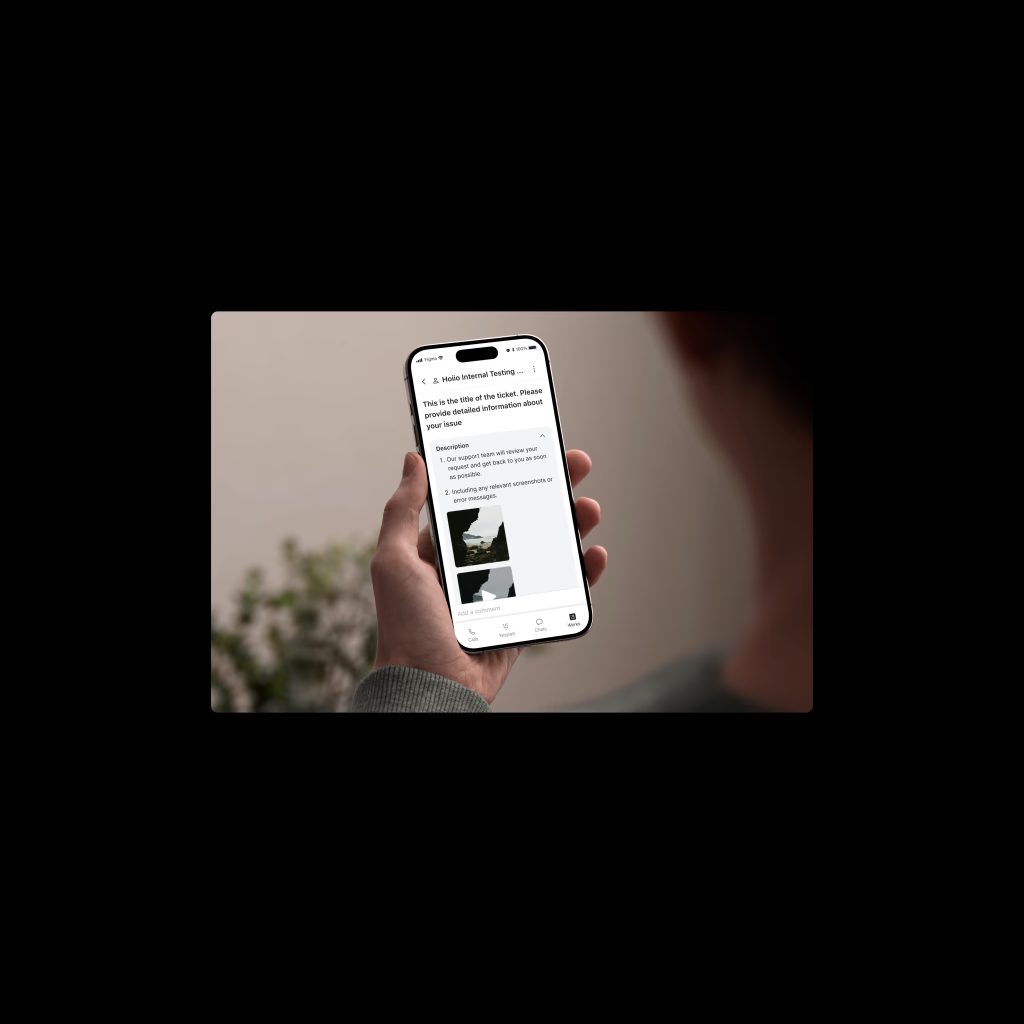
Weblock3: Web3 Learning Simulation Platform
Weblock3 is a solo concept project designed to simplify Web3 and Blockchain education. It provides a "safe sandbox" for beginners to practice complex digital transactions without financial risk

Overview
Role: Product Designer (End-to-end)
Platform: Mobile App
Workflow
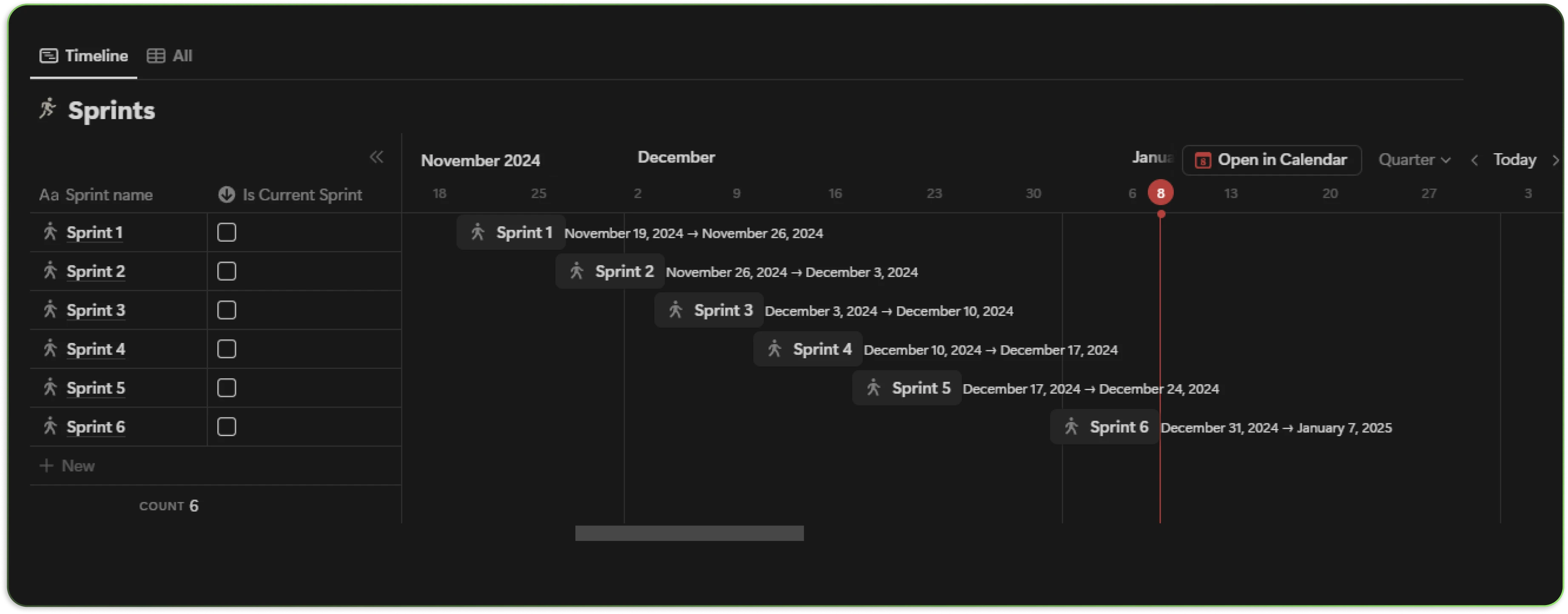
As the solo designer for Weblock3, I managed the entire end-to-end UX/UI process for this Web3 educational mobile app. Using an Agile methodology within Notion, I led the project through 6 sprints, covering everything from initial problem definition to final usability validation
Context & Problem
While cryptocurrency awareness is high, only 24% of people understand the concept of Web3. In Vietnam, users are hesitant to join the ecosystem due to technical barriers and high perceived risks
Key issue:
Abstract Complexity: Concepts like Blockchain, NFT, and DeFi are perceived as too technical and difficult to grasp
Fragmented Information: Existing guides are often scattered, overly technical, or lack clear, step-by-step instructions
Risk Anxiety: 72.4% of users fear losing their assets due to irreversible errors while learning to use tools like MetaMask
Legal & Security Concerns: 79.3% of participants expressed deep worry regarding the legal regulations and asset safety within the Vietnamese market
UX Research
Survey Result
Survey insights show high concern about security risks and legal regulations, but strong interest in practical learning in Web3. Users expect clear tutorials, transaction simulation, expert support, and community features.

Persona & Customer Journey
Persona 1

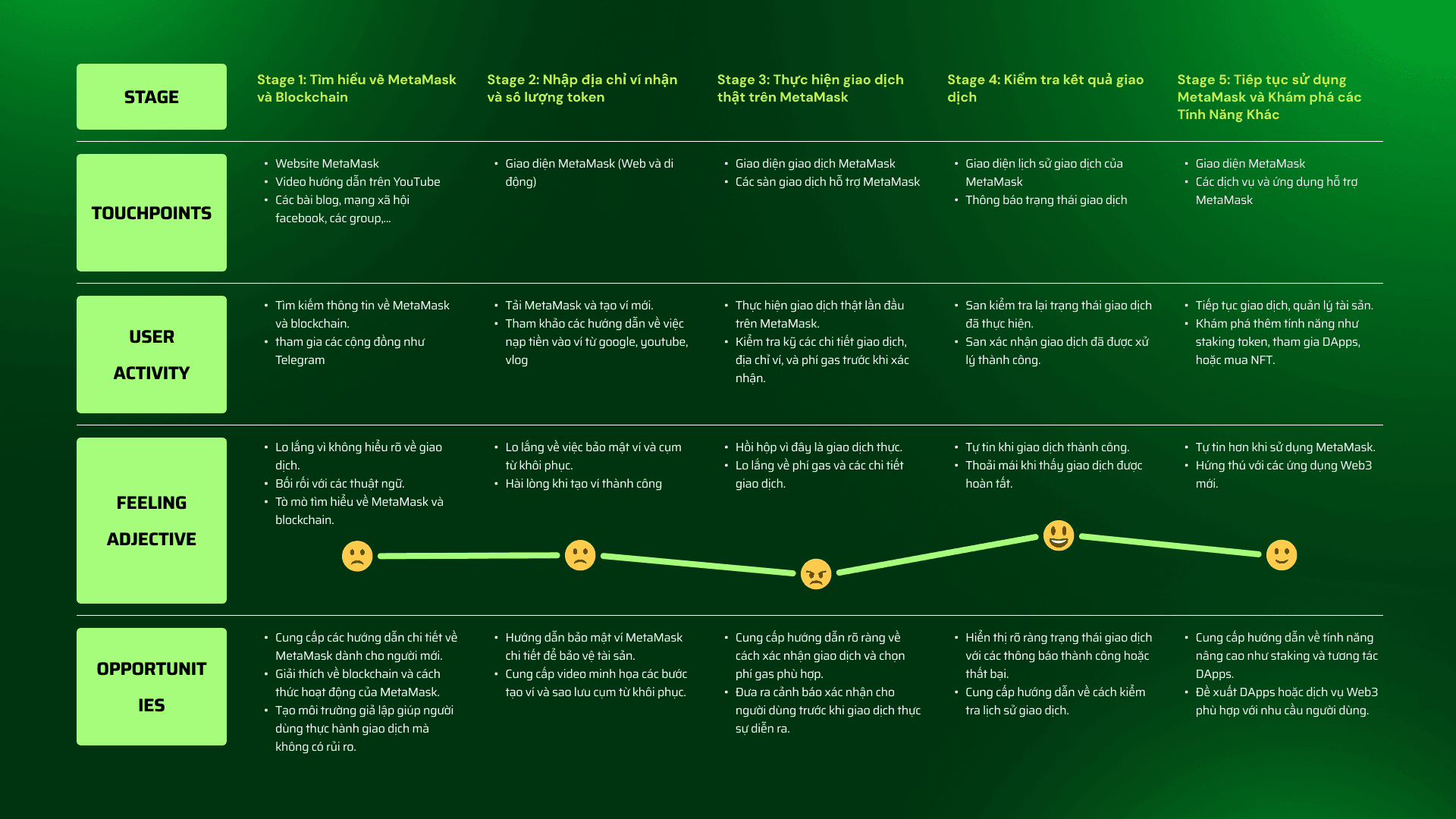
Key insight: San has basic knowledge but lacks confidence when doing real transactions, due to security concerns, complex interfaces, and unclear instructions.
She needs guided steps, real examples, and safe practice environment to feel secure using Web3 tools.
Persona 2


Key insight: Na is a beginner who feels overwhelmed by complex terms, lack of learning path, and fear of making mistakes when using blockchain apps.
She needs simple explanations, step-by-step tutorials, and beginner-friendly learning experience.
Design Solution
The concept for Weblock3 is to act as a secure bridge to the future of Blockchain by offering a "Learn by Doing" experience. The solution focuses on 3 strategic pillars:
Course Participation
This solution replaces fragmented information with a clear, guided learning path.
Personalized Discovery: The interface uses a "Home" dashboard with course suggestions and specialized filters (Tags/Chips) to help users find relevant topics like DeFi or NFTs without feeling overwhelmed.
Transparency & Reward: By providing a detailed syllabus before entry and certificates/rewards (NFTs or tokens) upon completion, the design creates a clear value proposition and maintains high user motivation

Course participation user flow

Course participation wireframe
Learning Progress Hub
This solution addresses the "complexity" pain point by providing a centralized space for users to manage their growth.
Centralized Progress Tracking: Within the Profile section, users have a dedicated dashboard to distinguish between "ongoing" and "completed" courses.
Persistence & Review: The design allows users to save notes and review highlighted content, ensuring that complex knowledge is retained and easily accessible for future reference.

Learning progress hub user flow

Learning progress hub wireframe
Interactive Simulation
As the "hero" solution of the app, this feature directly eliminates the fear of losing real assets, a concern shared by over 72% of surveyed users.
Safe Experimentation: Users can perform real-world technical tasks, such as creating a MetaMask wallet, in a simulated environment where errors have no financial consequence.
Real-time Scaffolding: To ensure users don't get stuck, the design integrates step-by-step hints and interactive video guides. This "scaffolding" approach was proven effective, with the simulation tasks achieving a 100% success rate during usability testing

Interactive simulation hub user flow

Interactive simulation hub wireframe
UI Design
Typography
After launch, we collected feedback from QA teams and continued improving the product.
Several enhancements were introduced, including bulk actions for updating multiple test results and Jira ticket integration to better connect testing and bug tracking workflows.

Color System

Component


Usability Testing
Success rate: 88.89%
Overall Directness Rate: 10s
Average Time: 1m24s

Lesson Learned
Weblock3 was developed during an advanced UX/Product design course, where the project followed a complete product design workflow similar to real-world development. I had the opportunity to go through the full process, including user research, card sorting, defining user flows, applying the Hook Model, prototyping, and usability testing. Working through every stage helped me understand that good UX is built through research, validation, and iteration, not just visual design.
By testing and refining the product multiple times, I learned how structured UX methods can simplify complex topics like Web3 and create a safer, more approachable learning experience for beginners. This experience improved my product thinking and strengthened my ability to design based on real user needs rather than assumptions.
.webp)
.webp)